
Migration, racial justice, and trans resistance: an urgent conversation for our time

Every June, Pride commemorations invite us to remember that rights were never granted as concessions, but rather achieved through collective struggles led by those who have historically lived at the margins. Racialized trans people, people living in poverty, sex workers, young people forced out of their homes, and migrant communities were at the heart of the resistance movements that gave rise to one of the most significant social movements of the last century.
The legacy of leaders such as Marsha P. Johnson, a Black trans woman, and Sylvia Rivera, a Latina trans activist and daughter of migrants, reminds us that struggles for sexual and gender diversity have always been deeply interconnected with struggles against racism, poverty, state violence, and social exclusion. Their lives and activism teach us that gender justice cannot be separated from racial justice.
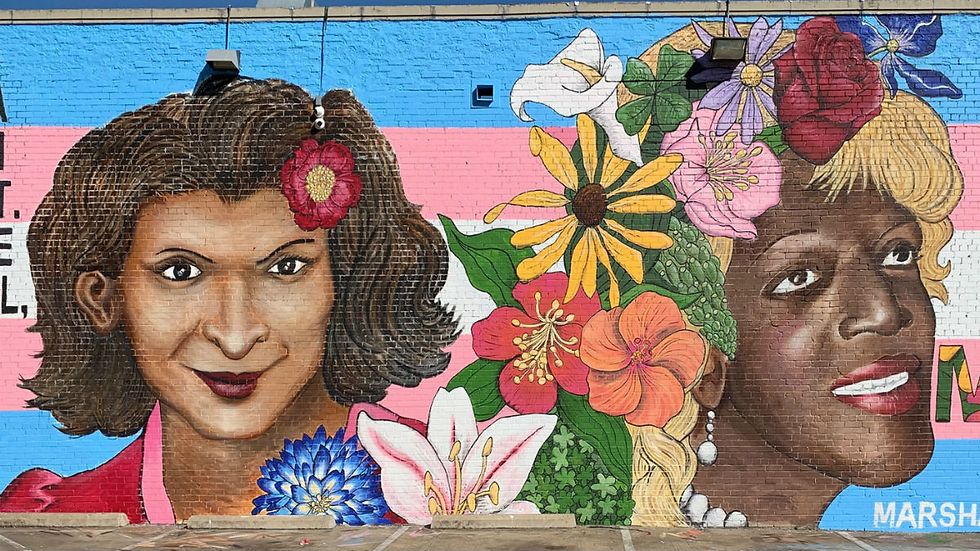
Today, across Latin America, Africa, and Europe, thousands of trans people and gender-diverse people continue to migrate in order to survive. They do so while fleeing violence, persecution, poverty, armed conflict, forced displacement, and systems that deny them the right to live with dignity. For many Black, Afro-descendant, Indigenous, and racialized trans people, borders are not merely geographic: they are also racial, economic, cultural, and political. Their bodies themselves become borders.
These experiences cannot be understood outside of history. Colonialism imposed racial hierarchies and systems of control over bodies, sexualities, and ways of being. Many of the forms of violence that racialized trans people face today are rooted in this colonial past, which continues to shape who is recognized as fully human and who remains relegated to the margins of citizenship and rights.
Yet the history of our peoples is also a history of resistance. From ancestral African and Indigenous memories to contemporary struggles for social justice, we find countless ways of defending life, building community, and challenging systems of oppression. Racialized trans people are not only subjects of violence; they are also producers of knowledge, community leaders, human rights defenders, and builders of possible futures.
This conversation takes on particular significance at a time when anti-gender policies are advancing in different parts of the world. Under narratives that invoke the protection of family, tradition, or national security, conservative and far-right sectors are promoting agendas aimed at restricting rights, criminalizing migration, deepening racism, and denying the very existence of trans people. These attacks are not isolated phenomena. They are part of a broader global political project that seeks to restore longstanding hierarchies of gender, race, nationhood, and power.
The consequences are tangible: an increase in hate speech, setbacks in human rights protections, the criminalization of migrants, and heightened levels of violence against trans people, particularly those who are Black, Afro-descendant, Indigenous, refugees, or migrants. Their bodies become sites where multiple systems of exclusion converge.
At Afroresistance, we understand that defending the rights and dignity of racialized trans people is inseparable from the broader struggle for racial justice, democracy, and human dignity. We also recognize that protecting trans children and adolescents is a collective responsibility in the face of those who seek to deny them the right to exist, learn, grow, and dream freely.
At a time when exclusion, forced displacement, and democratic backsliding are intensifying, it is more urgent than ever to strengthen alliances among feminist, anti-racist, human rights, and sexual and gender diversity movements. This conversation seeks to contribute to that dialogue by centering the experiences, knowledge, and forms of resistance of racialized trans people who, from different parts of the world, continue to defend life in the face of the many borders imposed by racism, transphobia, and exclusion.
Because there can be no racial justice without gender justice. There can be no democracy while some bodies remain condemned to violence and displacement. And there can be no viable future without the unwavering defense of the dignity and freedom of all people.


Me parece atractivo cómo Dandy Hats puede integrarse en outfits tanto casuales como streetwear.
For anyone passionate about fragrance, Kayali Perfume provides plenty of possibilities for discovering, combining, and enjoying new scents.
I have explored several gaming platforms recently, and this one left a good first impression. The registration process was straightforward, and getting started didn't take much time. The interface is clean and modern, which makes navigation comfortable. Performance has been stable during my sessions, and I haven't encountered any major issues. It's a platform that seems focused on providing a smooth experience, which is something many users will appreciate.
Tiranga Game