
Migration in Central America: Structural Violence and Resistance in Central America and the Americas

International Migrants Day – December 18

Migration in Central America and the Americas cannot be analyzed solely as a phenomenon of human mobility or as a temporary crisis. It is a historical and contemporary expression of structural inequalities produced by a global order that has organized the world between territories of origin and territories that control, filter, and discard lives, establishing borders not only on land but also on the bodies of those expelled by hunger, insecurity, and the lack of social justice in their countries of origin.
In this context, the Center for Justice and International Law (CEJIL) Bulletin "Migration Policies, Borders, and Pathways – Third Quarter 2025" and the Doctors Without Borders (MSF) report "Rejected" help us understand how current migration policies in the region not only fail to protect rights but also actively produce violence, inequality, precariousness, and exclusion (CEJIL, 2025; MSF, 2025).
CEJIL points out that “human mobility in Mexico and Central America responds to complex and changing dynamics, determined by structural, contextual, and political factors” (CEJIL, 2025). This statement directly challenges the security-based narratives and policies that present migration as a threat rather than as a consequence of economic, social, and political models that perpetuate inequality. From a critical and decolonial perspective, migration emerges as a survival strategy in the face of structural poverty, widespread violence, racism, territorial dispossession, and the climate crisis.

Migration Policies as Technologies of Exclusion
Both reports agree on a sustained hardening of migration policies in the region during 2024 and 2025. CEJIL documents the reduction of regular migration pathways, the weakening of the right to asylum, and the increase in forced returns and deportations without due process guarantees (CEJIL, 2025). These policies do not reduce migration; rather, they push it toward more dangerous routes and consolidate a regional containment system that externalizes borders and responsibilities.
The report "Rejected" delves into the human impacts of these policy decisions. MSF warns that the regulatory changes implemented by the United States, Mexico, and Central American countries have left thousands of people "trapped, stranded, or expelled into unsafe contexts, without real access to international protection mechanisms" (MSF, 2025). This situation creates a control architecture where forced waiting, physical and emotional exhaustion, and fear become tools of migration management.

Border Territories: Spaces of Sacrifice
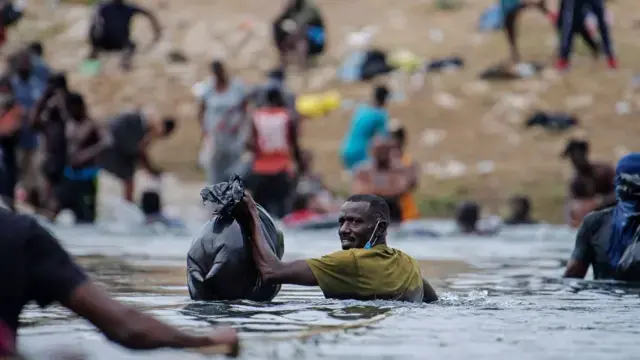
Borders have ceased to be spaces of transit and have become territories of confinement and human exhaustion. Border cities and towns in southern Mexico, Guatemala, Honduras, and Panama concentrate migrant populations forced to remain for extended periods in conditions of extreme precarity, in a context where hate speech and xenophobia are reinforced by governments, creating an external enemy and blaming them for the government's inability to effectively address the problems of the local population.
CEJIL warns that these dynamics directly impact local communities, which face militarization, stigmatization, and pressure on basic services, in addition to the disruption of historical dynamics of cross-border mobility and coexistence (CEJIL, 2025). MSF complements this analysis by documenting that many migrants remain hidden for fear of detention, which increases their exposure to violence, exploitation, and serious physical and mental health problems (MSF, 2025). From a decolonial perspective, these territories operate as sacrifice zones, where certain lives are considered disposable.

Sexual Violence in Contexts of Human Mobility
One of the most alarming findings of the report *Rejected* is the magnitude of sexual violence along migration routes. Between January 2024 and May 2025, MSF provided care to nearly 3,000 survivors of sexual violence and conducted approximately 17,000 mental health consultations, many related to kidnapping, extortion, torture, and sexual assault (MSF, 2025).
This violence disproportionately affects women, girls, and LGBTIQ+ people and cannot be understood as isolated incidents. It is a direct consequence of policies that force people to travel along clandestine routes, without institutional protection, where criminal actors and, in some cases, state agents operate with high levels of impunity. Sexual violence thus emerges as a structural form of violence produced by migration policies that control racialized and impoverished bodies.
Haitian Migration: Racism and Colonial Continuity
Haitian migration clearly exposes the racialized nature of migration policies in the Americas. CEJIL has documented specific obstacles for Haitians seeking international protection in the region (CEJIL, 2025). MSF, for its part, points out that this population is particularly affected by accelerated expulsions, denial of asylum, and prolonged confinement in unsafe conditions (MSF, 2025).
In the Dominican Republic, these dynamics manifest in systematic practices of racial persecution: arbitrary detentions, mass deportations, sexual violence against Haitian women and the deportation of pregnant Haitian women, and the exclusion of children from the education system. These practices constitute a colonial continuity that dehumanizes the Haitian population and systematically violates their fundamental rights, under the indifferent gaze of international organizations.
Migration as a Right, Resistance as a Practice
Taken together, the CEJIL and MSF reports confirm that migration in Central America and the Americas is being managed from a logic of exclusion that deepens historical inequalities and produces avoidable suffering. From a critical and decolonial perspective, it is urgent to dismantle a system that prioritizes control and sovereignty over life.
Despite this scenario, migrants are not only victims. The reports also show—albeit in a fragmented way—the existence of community networks, local organizations, and care practices that sustain life in contexts of institutional abandonment. Migration is, in itself, an act of resistance against an order that denies present and future rights.
On International Migrants Day, recognizing the dignity of people on the move implies transforming policies that generate violence, guaranteeing safe routes, protecting border territories, and confronting the structural racism that permeates migration management. Migration is not the problem; The problem is an order that expels, rejects and violates, and that still resists recognizing human mobility as a right.

From AfroResistance, we affirm that migration, and in particular the migration of Black people in the Americas, is a direct consequence of structural racism and a colonial order that continues to produce expulsion, dispossession, and death. Our work has focused on denouncing the criminalization and dehumanization of Afro-descendant migrants, making visible the violence they face on routes and at borders, and challenging the policies and narratives that portray them as a threat, thus dehumanizing their humanity. Migration is a right; resistance is a political practice against a system that denies the humanity of Black bodies on the move.


Kayali Perfume can be a great addition to any perfume collection, especially if you like switching fragrances for different occasions.